

Is It Ok To Take Antibiotics With A New Tattoo
I have about 10 tattoos, all done in my thirties, all on the larger side, and most done by the same incredibly talented tattoo artist. Although I'g by no means as inked as some others, I thought I was pretty seasoned when it came to the tattoo-getting experience.
And and so the unthinkable happened. No, I didn't go something spelled wrong. One of my tattoos got infected.
I'd had some gnarly heals with a couple other tattoos — by and large just some thick scabbing — simply I'd never seen what was happening to my beautiful new arm art on any of my previous tattoos. First, it started out with a lot more postal service-engagement pain than in the by, and for a lot longer. I thought information technology was because of where the tattoo is located — the inner elbow "ditch" is notoriously brutal — and so I tried to exist patient as several days went by with me beingness unable to bend and straighten my arm without wanting to scream. Then I noticed that some of the not-inked skin in the surface area was red and warm to the touch. And finally, after well-nigh a week, the prettiest development of all: goo.
In a panic, I looked up photos of infected tattoos on Instagram, and yikes. It was at this betoken that I consulted my dermatologist, who prescribed both topical and oral antibiotics. And within a few days the hurting and redness — and goo — were gone.
I take no doubt the infection had goose egg to do with my artist'southward execution and almost entirely to do with the fact that the tattoo was located in 1 of the sweatiest parts of my body — not to mention that I would discover pieces of my dog's hair sticking information technology to it no matter how clean I tried to proceed the area. But to solve the mystery of how tattoos get infected, we asked the experts — a tattoo artist and ii dermatologists. Follow their advice below to lower your risk for infection and get the correct treatment should one occur.
1. Advisedly consider the trunk part you want inked.
"Any function of the body is at risk for infection," says Ife Rodney, M.D., F.A.A.D., board-certified dermatologist and medical managing director at Eternal Dermatology in Fulton, Maryland. "Just places that are decumbent to more than moisture and leaner — similar nether the arms, the lip and feet — get infected more easily. Plus, the lower extremities, in general, take a bit longer to heal, making them more prone to infections." However, you actually want to be careful with hands and fingers. "We touch and then many different surfaces every day, that these tattoos have the greatest risk, particularly since we will need to control ourselves from using our hands while the tattoo heals," explains Dr. Rodney.
Plus, if at that place are whatever signs of skin inflammation (like a rash, redness, broken or irritated skin), Dr. Rodney recommends waiting until the site is completely healed and the skin is normal. "Besides, if you are treating an unrelated skin status using topical medications like a steroid cream, these medications could increase the risk of infection, even if the skin appears normal," she adds.
2. Find a reputable tattoo parlor and artist.
"While almost infections happen in aftercare, some start right at the tattoo parlor," says Dr. Rodney. "Make sure the tattoo parlor is licensed considering licensed parlors are regularly inspected by a health bureau. Also, do a little research beforehand to check the safety/infection tape of the creative person and ask them well-nigh their equipment sterilization practices and protocols. They should have no problem with you seeing them in action."
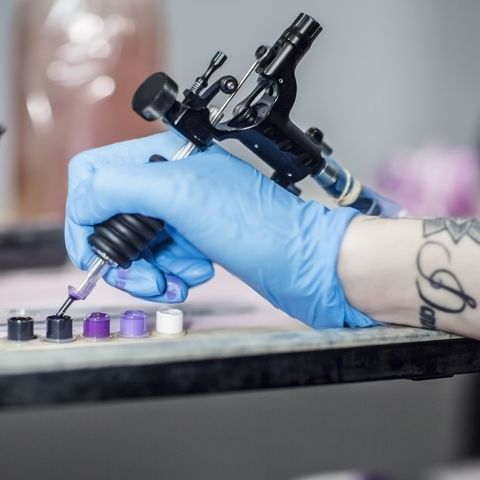
"Tattoo artists should follow Universal Precautions, the standard for anyone who could be in contact with blood or bodily fluids, and take claret borne pathogen training," explains Joe Lathe-Vitale, a store owner and tattoo artist for 20 years. "An creative person who'southward properly trained and using skilful rubber measures will greatly minimize whatsoever chance of infection." Lathe-Vitale says a properly trained tattoo artist will always use sterile, single-use needles, and properly sterilize and make clean any materials that are reused; however, most artists now employ entirely single-utilize disposable items. You'll likewise want to make certain they use new gloves with each client and change gloves as needed during the procedure, Dr. Rodney points out.
Remember, your artist is as well responsible for making certain the peel is properly prepped before starting. "You can develop an infection if the skin isn't adequately cleaned before getting a tattoo," says Joshua Zeichner, M.D., lath-certified dermatologist and Managing director of Cosmetic and Clinical Enquiry at the Mountain Sinai Hospital Section of Dermatology.
three. Stay diligent during the healing process.
Even if your artist does everything correctly, what happens after yous leave the shop is the key to salubrious healing. "A tattoo that is properly done by a reputable artist is pretty resilient. Information technology will heal if just left alone and kept clean," Lathe-Vitale says. "It's outside bacteria that tin can cause problems."
Although every artist has preferences for after-care, virtually emphasize how important it is to go along the tattooed skin moisturized and clean — which means avoiding some very normal behaviors that would otherwise be harmless. "In my opinion, the most important thing is for a client to never touch on the tattoo without beginning washing their hands," says Lathe-Vitale, even before applying any moisturizer or ointment. Additionally, he says it'due south best not to soak your new tattoo in a tub, use body scrub on information technology or let your pet lick or scratch it.
four. Know the signs of infection.
If you've always gotten a tattoo, y'all know it's par for the form to take pain and swelling after a session — and both Dr. Rodney and Dr. Zeichner agree that's normal. Nevertheless, annihilation beyond that may be cause for concern, especially if symptoms last for iii or more days. "If yous are developing pregnant warmth, redness or tenderness, you may accept developed an infection," says Dr. Zeichner. "If y'all feel unwell or take a fever or any pus in the area of the tattoo, these can be other signs of an infection." Yous'll also want to be aware of leaking ink or excessive itching, notes Dr. Rodney.
5. Get a proper diagnosis.
Even if your previous tattoos accept healed perfectly, it's imperative to consult a board-certified dermatologist if you lot take signs of an infection. "Other conditions, like allergic reactions to tattoo ink, may present in a similar manner, with redness, itching and swelling," says Dr. Rodney. "As treatment for both of these conditions is different, it is best to figure out the correct diagnosis ASAP."
She says a dermatologist will usually perform a concrete exam, looking and feeling for signs of an infection or allergic reaction. "If the infection appears serious or if information technology does not resolve with the initial treatment, we may take a civilisation of the skin," explains Dr. Rodney. "This is a uncomplicated swab that is sent to the lab to effigy out the exact blazon of bacteria that is causing the infection, and the best treatment for it. For the most resistant infections, a skin biopsy may be washed, in which a small tissue sample of peel is sent to a lab for testing."
vi. Don't effort to treat it yourself.
You cannot count on an infection to clear up without medication. "If not treated, infections typically practise not resolve on their own," says Dr. Zeichner. "They can abound in size and get quite large and tender. As with whatsoever peel infection, in astringent cases bacteria can enter your bloodstream and actually get life-threatening."
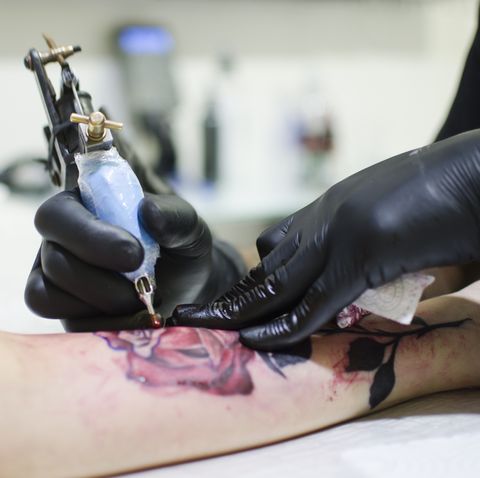
Keep in mind, tattoo infections are ordinarily deeper in the skin as the needle pierces i.5 to 2 mm into the skin, notes Dr. Rodney, so an OTC antibiotic ointment isn't going to cutting it. "Depending on the severity of the infection, your dermatologist may prescribe a prescription topical antibiotic," Dr. Zeichner explains. "In some severe cases, you may receive an oral antibody instead."
If yous try to treat an infection on your own, you could delay the treatment and terminate upwardly with scarring. "Not only is this risky, just it can also ruin the advent of your new tattoo," says Dr. Rodney. "The infected skin may non heal correctly, leaving an unsightly scar or an abscess that needs to be drained past a md."
vii. Be prepared to have your tattoo fixed.
"If an infection occurs, it'south not the end of the earth," says Lathe-Vitale. "Once it's cleared up, the tattoo can always exist touched upwards if necessary." The important thing is to look until the peel has fully recovered because an infection can hinder the healing of the original tattoo. "This may hateful that tattoo pigment is not properly retained in the skin," explains Dr. Zeichner. "It's okay to get a touch up; however, I recommend waiting at least one to two months after the infection has resolved to make sure that the peel is fully healed." At that point, Lathe-Vitale advises letting your artist visually inspect the tattoo to determine if it'due south ready.
This content is created and maintained by a third party, and imported onto this page to assistance users provide their email addresses. Yous may be able to detect more information most this and like content at piano.io
Source: https://www.goodhousekeeping.com/health/a47062/infected-tattoo/
Posted by: johnsonaffeekly.blogspot.com
0 Response to "Is It Ok To Take Antibiotics With A New Tattoo"
Post a Comment